What Is a Laboratory Information System (LIS)?
A laboratory information system (LIS) is the software a clinical lab runs on, from the order that arrives to the report that leaves. This guide follows a specimen through one, shows which CLIA duties land on it at each step, separates it from a LIMS, and sets out how to build a shortlist. Every rule was read from 42 CFR 493 on 23 October 2026.
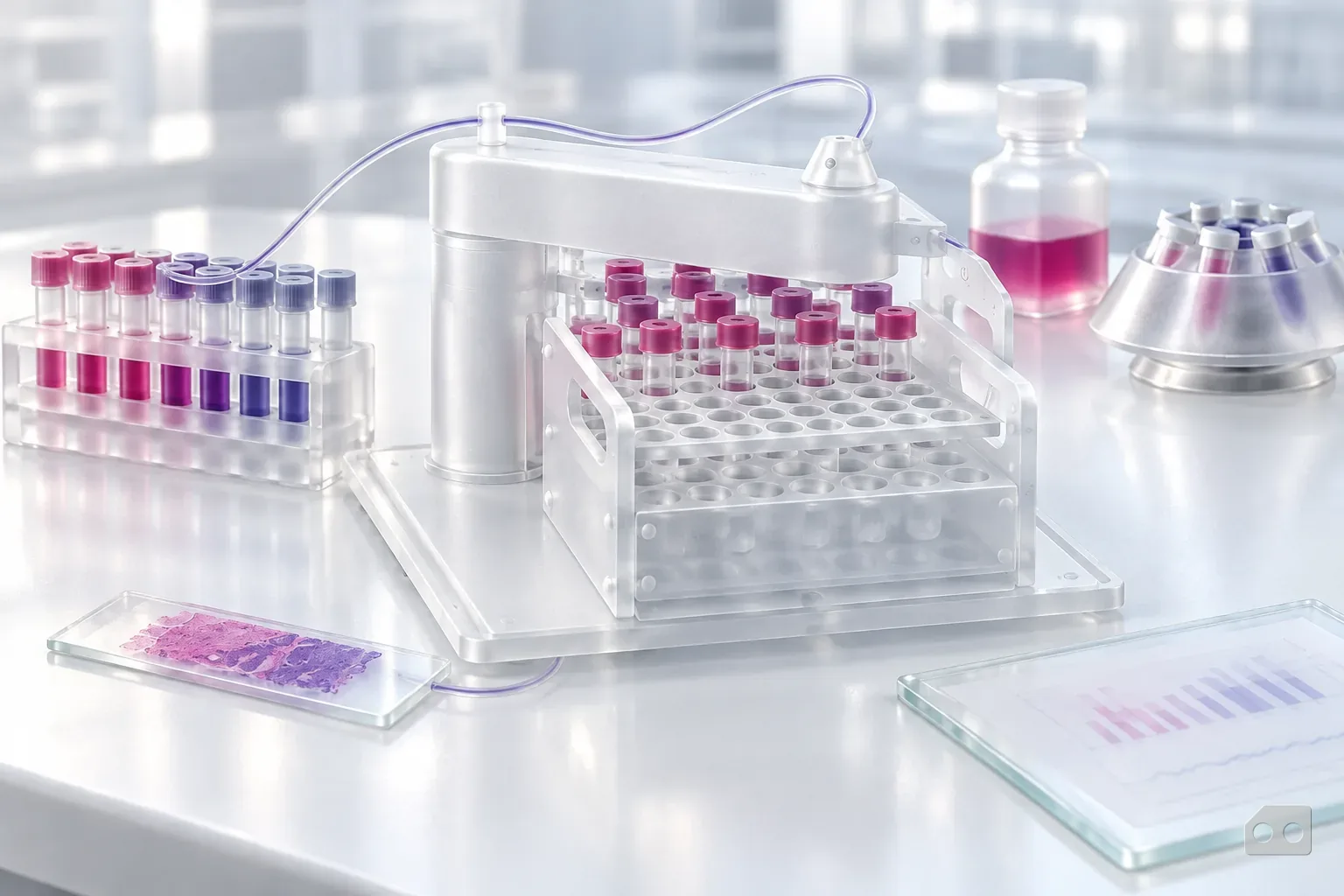
What an LIS does, specimen to report
A laboratory information system is the software a clinical lab runs its testing on: it takes the order in, follows the tube through the bench, and sends a signed report back to whoever ordered it. CLIA splits that same path into three systems in Subpart K, and an LIS touches every one of them.
Preanalytic
§ 493.1240–1249
AOrder
Takes the electronic order from the EHR or the requisition typed at the front desk, and asks for the fields CLIA wants on it: patient identifier, sex and age or date of birth, tests, source, collection date.
§ 493.1241BAccession
Gives the specimen its number and label, stamps the date and time it arrived, and records any specimen rejected and why.
§ 493.1242(b)
Analytic
§ 493.1250–1289
CRun and QC
Sends worklists to the analyzers, takes the results back through the interface, and files each run's control results beside the patient results they cover.
§ 493.1256DReview and release
Shows the tech or director what is waiting, records who ran and released each result, and flags panic values for an immediate call.
§ 493.1283
Postanalytic and after
§ 493.1290–1299, § 493.1105
EReport
Builds the report with the content § 493.1291(c) lists and sends it to the EHR, portal or printer; a correction keeps the original readable.
§ 493.1291FKeep
Holds reports, QC and test records for at least two years, pathology reports for at least ten, and finds them while a surveyor waits.
§ 493.1105
Most small-lab systems also hand each finished test to billing as a charge, which is outside CLIA but often the reason a lab buys one. If billing is your real problem, start with lab billing software instead.
The LIS numbers CLIA sets
- Test reports kept2 years after reporting
- Pathology test reports keptat least 10 years
- QC and patient test records keptat least 2 years
- PT records kept2 years from the event
- Oral order authorized in writing or electronicallywithin 30 days
- Panic value calledimmediately
What CLIA expects of an LIS
CLIA never names software. It places duties on the laboratory, and the LIS is where most of them are met or missed. These are the nine duties our LIS comparisons score every vendor on, in the same words and with the same cites, set against the step of the flow where each one lands.
| Step | What the LIS must do | What 42 CFR 493 says |
|---|---|---|
| B Accession | Supports proficiency testing entry or export§ 493.801(b) | PT samples are tested “in the same manner as it tests patient specimens” |
| C Run and QC | Stores QC with patient results and holds results when QC fails§ 493.1256(f), (g) | Controls acceptable “before reporting patient test results”; “document all control procedures performed” |
| D Review and release | Keeps an audit trail of result changes§ 493.1283, § 493.1291(k) | “the identity of the personnel who performed the test(s)”; “Maintain duplicates of the original report, as well as the corrected report” |
| D Review and release | Flags critical values and logs the call§ 493.1291(g) | “immediately alert” the person who ordered the test on panic or alert values |
| E Report | Prints the report content CLIA requires§ 493.1291(c) | Patient identification, “The name and address of the laboratory location where the test was performed”, report date, test, source, result and units |
| E Report | Sends reportable results to the state health department§ 493.1291(a); state law | Results reach every destination “accurately and reliably”; the state sets what it must receive |
| F Keep | Keeps test records and reports for at least two years§ 493.1105 | Reports “at least 2 years after the date of reporting”; pathology reports “at least 10 years” |
| F Keep | Exports the records an inspector or a CMS-2567 response needs§ 493.1773(c) | Records “accessible and retrievable within a reasonable time frame during the course of the inspection” |
| Every step | Limits access by user role§ 493.1231 | Confidentiality “throughout all phases of the total testing process” |
The laboratory must maintain an information or record system that includes the following:
That sentence is the closest CLIA comes to asking for an LIS. What follows it is the list a system has to hold: the positive identification of the specimen, the date and time it arrived, what happened to specimens that were rejected, and the records and dates of all testing with the person who ran it. Paper can do this; an LIS does it without anyone having to remember.
CLIA has no section titled “audit trail”. A trail of who changed which result, and when, is how most labs prove § 493.1283 and the corrected-report rule in § 493.1291(k) at once. A surveyor will not ask whether you have one; they will ask you to show the original of a corrected report. The inspection guide covers what else they pull.
No LIS is “CLIA certified”
CMS certifies laboratories, never products. A vendor can show how its system supports each duty above; the certificate, and the deficiency if a duty is missed, stay with your lab.
A proposed change to report content
CMS's proposed rule CMS-3478-P, published 8 October 2026, would add the CLIA number and the laboratory's name “as it appears on the CLIA certificate” to every test report (a revised § 493.1291(c)(2)). It is a proposal, not a rule; comments close 7 December 2026 (Federal Register). A report template you can edit yourself is worth asking about now.
Takeaway
LIS vs LIMS, from the clinical side
Vendors use the two words loosely, and some sell one product under both. Three questions settle which one a clinical lab is actually buying.
Who gets the result?
An LIS sends a patient's result to the clinician who ordered it, and often a charge to a payer. A LIMS returns a sample's result to whoever submitted the sample: a study, a plant, a client.
What is the record built around?
An LIS is built around the patient and the order. A LIMS is built around the sample, the batch and the project, with the person behind the sample often unknown to it.
Does CLIA reach it?
CLIA covers testing of “materials derived from the human body for the purpose of providing information for the diagnosis, prevention, or treatment of any disease” or the assessment of health (§ 493.2). Research that never reports patient-specific results is outside it (§ 493.3(b)(2)). Software doing the first job carries every duty on this page, whatever its brochure calls it.
This site covers the clinical side only. If your samples come from studies, manufacturing or the environment rather than patients, the LIMS market and its rules are a different buying exercise from the one below.
How to shortlist an LIS
- Start from your certificate and menu. The highest test complexity you run decides which CLIA rules apply, and the specialties you test in decide which modules you need. A waived-only office lab carries none of the Subpart K duties above.
- List every connection. Each analyzer, each EHR that sends orders, your billing system, your reference lab and the state health department is an interface. Ask which ones the vendor has already built and which it would build for you.
- Take the nine duties into the demo. Ask the vendor to show each one live, on its own data. Our LIS comparison for small clinical labs scores each system on exactly those rows, with the document behind every mark.
- Agree how you leave before you join. A copy of each report must stay retrievable “at least 2 years after the date of reporting”, and pathology reports for at least 10 years (§ 493.1105). Put read access or a full export of old reports in the contract.
- Test the interfaces before go-live. CLIA asks for a system that sends results “accurately and reliably” from the point of entry to the final report (§ 493.1291(a)). Run known results through every interface and compare the printed report before the first patient.
- Check the requisition. The order screen must ask for what § 493.1241(c) lists, including the patient's sex and age or date of birth and the collection date. An oral order needs written or electronic authorization “within 30 days” (§ 493.1241(b)); ask how the system chases it.
Price the rows, not the base system
On the vendor pages our LIS comparison read, interfaces, hosting and options such as a PT export are charged as separate lines. Ask for each line you need in writing. This page carries no prices, and neither do our comparisons.
Which comparison to read next
This page names no vendor and picks no winner. The comparisons below do, each against the same CLIA duties and each with its own rows for the work that kind of lab does.
- A physician office lab, clinic or small independent lab running general chemistry, hematology and urinalysisBest LIS software for small clinical labs
- Down to the two names small labs ask about mostCGM LABDAQ vs Orchard Harvest
- Anatomic pathology: cases, blocks, slides and synoptic reportsBest pathology LIS
- Toxicology: screens, confirmations, medication lists and cutoffsBest toxicology LIS and lab software
- Molecular and PCR: plate maps, Ct values, pooling and run QCBest LIS for molecular and PCR labs
- Reagent lots, expiry dates and receipt records, next to the LISLab inventory software for CLIA labs
Takeaway