CGM LABDAQ vs Orchard Harvest
For lab directors and physician office lab managers with CGM LABDAQ and Orchard Harvest, now sold as Clinisys Harvest, on the same shortlist. We read CGM's product, option and report pages and its brochure, Clinisys's product page, interface specification and certification records, and 42 CFR 493 on eCFR, and checked each system against the same CLIA rows as our small-lab LIS comparison.
The verdict by use case
Pick LABDAQ if your office lab is going nonwaived
CGM documents what a first nonwaived lab leans on: QC rules that hold results, critical call logs, a proficiency testing export, and a POL setup of one workstation and up to three analyzers.
Pick Harvest if your results feed many systems
Clinisys publishes Harvest's HL7 result specification and a May 2026 ONC certificate covering role-based access and electronic lab reporting to public health agencies.
Either fits if the demo settles the gaps
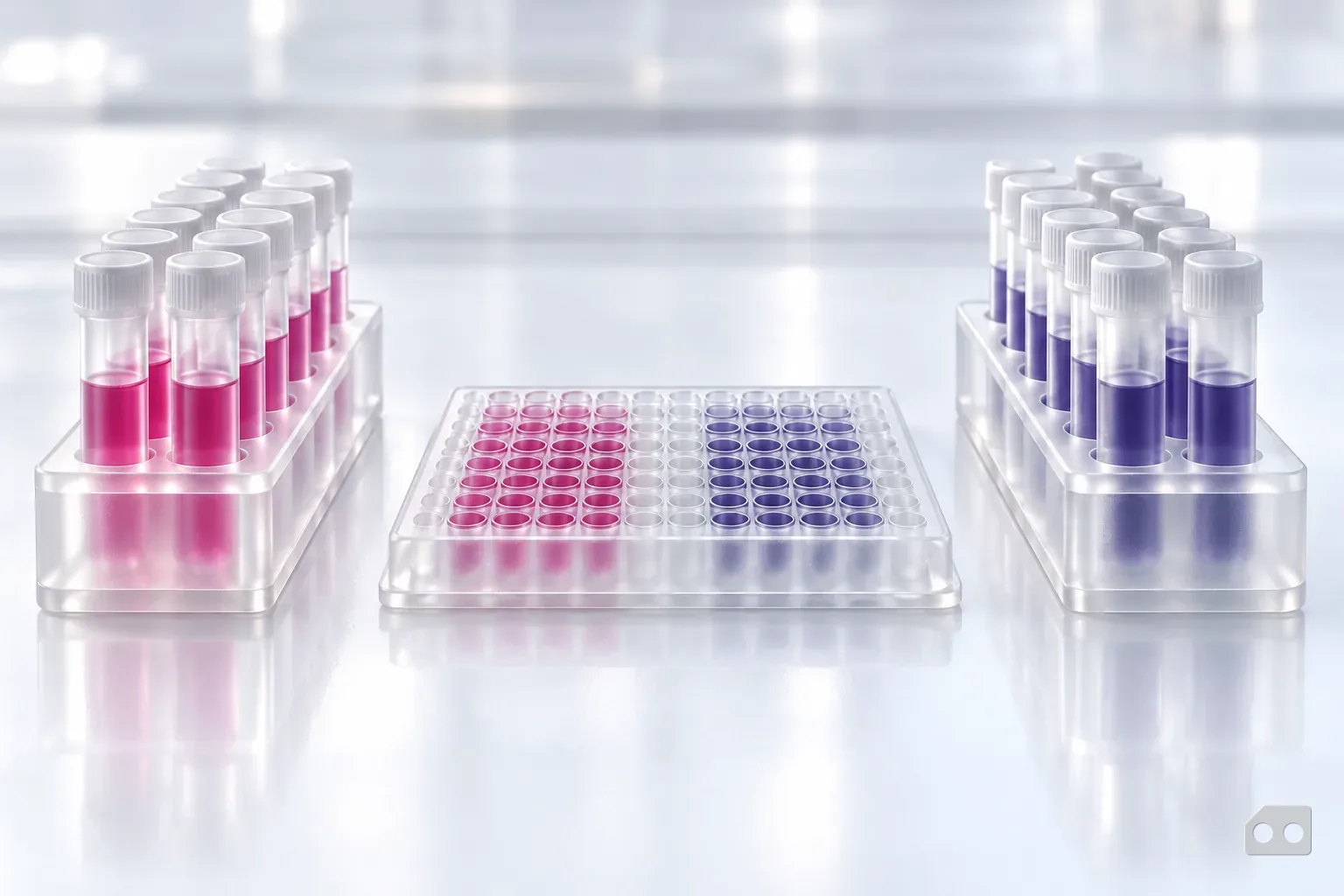
Both document critical-value flags, EHR interfaces and a state feed. If the blank wells below do not decide it for your menu, run the demo script and pick on the answers.
CLIA duty by duty, both systems
Each row is a duty from 42 CFR 493 with its section in mono, in the same order as our small-lab LIS comparison. A filled well means a vendor document or certification record shows the function; read the legend before the wells.
- verified against a document
- stated by the vendor
- not stated
Scroll sideways for more vendors
| Requirement | 1CGM LABDAQ | 2Clinisys Harvest |
|---|---|---|
| AKeeps test records and reports for at least two years§ 493.1105 | CGM LABDAQ: stated by the vendor | Clinisys Harvest: not stated |
| BKeeps an audit trail of result changes§ 493.1283, § 493.1291(k) | CGM LABDAQ: stated by the vendor | Clinisys Harvest: stated by the vendor |
| CStores QC with patient results and holds results when QC fails§ 493.1256(f), (g) | CGM LABDAQ: stated by the vendor | Clinisys Harvest: not stated |
| DPrints the report content CLIA requires§ 493.1291(c) | CGM LABDAQ: stated by the vendor | Clinisys Harvest: verified against a document |
| EFlags critical values and logs the call§ 493.1291(g) | CGM LABDAQ: stated by the vendor | Clinisys Harvest: verified against a document |
| FSupports proficiency testing entry or export§ 493.801(b) | CGM LABDAQ: verified against a document | Clinisys Harvest: not stated |
| GLimits access by user role§ 493.1231 | CGM LABDAQ: stated by the vendor | Clinisys Harvest: verified against a document |
| HSends reportable results to the state health department§ 493.1291(a); state law | CGM LABDAQ: stated by the vendor | Clinisys Harvest: verified against a document |
| IExports the records an inspector or a CMS-2567 response needs§ 493.1773(c) | CGM LABDAQ: verified against a document | Clinisys Harvest: stated by the vendor |
What each vendor's own documents say
Two vendors fit in one table, so here is the evidence behind every well in their own words. Where a document names a function only in passing, the row says so; that is usually the question to open the demo with.
| CLIA row | CGM LABDAQ | Clinisys Harvest |
|---|---|---|
| AKeeps test records and reports for at least two years§ 493.1105 | statedThe brochure lists “Data archiving not required” and “No significant storage limits other than physical storage capacity”. No retention setting is described. | not statedNo retention statement in the pages we read. Its certified EHI export (ONC criterion 170.315(b)(10)) covers getting records out, not keeping them. |
| BKeeps an audit trail of result changes§ 493.1283, § 493.1291(k) | stated“An audit trail that records system access at the user level”. Version 26.1 adds a view of deleted requisitions, shown in red strikethrough. Neither describes a history of edited results. | statedThe product page names “audit trails”. Its ONC certificate covers auditable events and audit reports, which Clinisys describes as logs of events “related to disclosure of PHI”, not result edits. |
| CStores QC with patient results and holds results when QC fails§ 493.1256(f), (g) | stated“QC rules that prevent the release of results if QC has not been run or is unacceptable”, plus Levey-Jennings, control summary and corrective action reports. | not statedNothing on QC lockouts or QC records in the pages we read. Ask to see it. |
| DPrints the report content CLIA requires§ 493.1291(c) | stated“Patient reports are available in many different formats and can be specified per provider.” No field list is published. | verifiedThe result specification sends the specimen source, units, a test location for every result line and the approving technologist, field by field. |
| EFlags critical values and logs the call§ 493.1291(g) | stated“Automatic alerts for critical test results” and “Critical call logs and audit reports”. | verifiedThe specification flags results HH (critical high), LL (critical low) and A! (critical abnormal). It does not show where the call is logged. |
| FSupports proficiency testing entry or export§ 493.801(b) | verifiedThe API Proficiency Export option sends PT data “to API proficiency software”, so labs enrolled with another PT program should ask how their results get there. | not statedNothing on proficiency testing in the pages we read. |
| GLimits access by user role§ 493.1231 | stated“User permission settings” and “Strong password protection”. | verifiedCertified for access control that “controls the access of the user based upon defined security settings”, and for multi-factor authentication. |
| HSends reportable results to the state health department§ 493.1291(a); state law | stated“State Health Departments” appears in its library of interfaces. | verifiedCertified for sending reportable results to public health agencies in HL7 2.5.1. Clinisys's 2025 real-world test counted results sent to the state from two hospital labs on Harvest. |
| IExports the records an inspector or a CMS-2567 response needs§ 493.1773(c) | verifiedData Miner queries patient results, controls and requisitions, and “Prints data in a grid format or exports to Microsoft Excel”. | statedThe product page offers “on-demand data mining, customizable queries, and standardized reports”; no export format is described. |
The two systems
CGM LABDAQColumn 1
What it is
CompuGroup Medical's LIS, installed on site or hosted by CGM in a SOC 2 Type 2 certified data centre. CGM's product page lists 4,000 labs served, 67 analyzer companies interfaced and 30 years of LIS experience; version 26.1 came out in May 2026.
Who it fits
A physician office lab or small independent lab adding moderate-complexity testing. CGM sells a POL configuration with one workstation, up to three analyzer interfaces and EHR integration that grows into the full LIS, and prices options one by one.
What CLIA asks, and whether it meets it
AKeeps test records and reports for at least two years
§ 493.1105 stated, vendor page; check with the vendor
BKeeps an audit trail of result changes
§ 493.1283, § 493.1291(k) stated, vendor page; check with the vendor
CStores QC with patient results and holds results when QC fails
§ 493.1256(f), (g) stated, vendor page; check with the vendor
DPrints the report content CLIA requires
§ 493.1291(c) stated, vendor page; check with the vendor
EFlags critical values and logs the call
§ 493.1291(g) stated, vendor page; check with the vendor
FSupports proficiency testing entry or export
§ 493.801(b) verified, source
GLimits access by user role
§ 493.1231 stated, vendor page; check with the vendor
HSends reportable results to the state health department
§ 493.1291(a); state law stated, vendor page; check with the vendor
IExports the records an inspector or a CMS-2567 response needs
§ 493.1773(c) verified, source
Clinisys HarvestColumn 2
What it is
Orchard Software's LIS, sold today by Clinisys as Clinisys Harvest (formerly Clinisys Orchard Harvest) and delivered as SaaS. Clinisys publishes its HL7 result-export specification and an ONC Health IT certificate for versions 14 and 15.
Who it fits
A lab whose results go to many EHRs, providers and the state, or that runs microbiology or anatomic pathology beside the core lab in one application. Clinisys also invites Harvest sites to talk about converting to Clinisys Orchard, so ask about the roadmap.
What CLIA asks, and whether it meets it
AKeeps test records and reports for at least two years
§ 493.1105 not stated; check with the vendor
BKeeps an audit trail of result changes
§ 493.1283, § 493.1291(k) stated, vendor page; check with the vendor
CStores QC with patient results and holds results when QC fails
§ 493.1256(f), (g) not stated; check with the vendor
DPrints the report content CLIA requires
§ 493.1291(c) verified, source
EFlags critical values and logs the call
§ 493.1291(g) verified, source
FSupports proficiency testing entry or export
§ 493.801(b) not stated; check with the vendor
GLimits access by user role
§ 493.1231 verified, source
HSends reportable results to the state health department
§ 493.1291(a); state law verified, source
IExports the records an inspector or a CMS-2567 response needs
§ 493.1773(c) stated, vendor page; check with the vendor
Orchard is now Clinisys: what that means for Harvest
Clinisys says it plainly on its own history page: “Orchard Software is now Clinisys”, and Orchard's products, “now branded with the Clinisys name, will continue to be available and supported.” The old orchardsoft.com address now forwards to clinisys.com. So when a colleague says “Orchard”, they mean a product family that Clinisys sells today.
The family has two LIS products, and the names trip buyers up. Clinisys's 2025 testing report lists Clinisys Harvest “(formerly Clinisys Orchard Harvest)” and Clinisys Orchard “(formerly Clinisys Orchard Enterprise Lab)”. Harvest is the one compared here. Clinisys Orchard is the other system, which Clinisys pitches at “high-volume, complex workflows”.
The detail that matters most for a new buyer sits at the foot of the Harvest product page: “To learn more about converting from Clinisys Harvest to Clinisys Orchard, please contact our team.” That is not an end-of-life notice, and Clinisys has not published one. It does tell you where Clinisys sees Harvest sites going.
Against that, Harvest is still being certified. Clinisys's ONC Health IT disclosure lists Harvest 14 and Harvest 15, both certified on 18 May 2026, and the Drummond Group certificate for version 15 covers EHI export, access control, audit logs, multi-factor authentication and reporting to public health agencies. The same disclosure names the fee lines: an annual support contract, and a per-interface fee for certified interfaces added after the original installation.
Four questions for Clinisys before you sign for Harvest
- Which version would we go live on, and when is the next one due?
- Is there a date after which Harvest stops getting new features or ONC recertification?
- If we convert to Clinisys Orchard later, what moves across, and who pays for the conversion?
- Can we speak to a Harvest site of our size that went live in the last two years?
Office lab or outreach lab: who each is built around
CGM is explicit about the small end. Its LABDAQ reports and systems page describes CGM LABDAQ POL as “designed for the lower volume, physician office laboratory”, with one workstation, up to three analyzer interfaces, EHR integration and on-site training, and says it “can expand to the full laboratory information system (LIS) as the laboratory grows”. The same page lists toxicology, forensic and veterinary setups, and the product page adds the LABNEXUS portal for providers who order without an EHR connection.
Clinisys does not publish a small-lab configuration for Harvest. Its product page leans the other way: microbiology worksheets, anatomic pathology “in one application” with clinical testing, a Webstation where providers order and pull results, and a remote workstation for point-of-care testing sites. Both labs in Clinisys's 2025 real-world testing of Harvest were hospital laboratories. None of that rules out a small lab; it means you should ask for a reference site that looks like yours.
Hosting is close to a tie. LABDAQ runs on site or in CGM's cloud, which CGM sells as a subscription; Clinisys delivers Harvest as SaaS. Either way, ask who owns the database backups and how fast you get a full copy if you leave.
Takeaway
A physician office lab adding its first moderate-complexity analyzer starts closer to LABDAQ. A hospital or outreach lab with microbiology, pathology and many outbound interfaces starts closer to Harvest, with the roadmap questions above answered in writing.
The demo script: what to make each one show you
If the verdict trays above leave you with “either one”, the tie breaks in the demo. Each step below goes after a ringed or blank well, names the vendor it is aimed at, and quotes the CLIA line it tests. Ask for the step on a live system with your own test names, not on slides.
- 01
Both: Correct a released result, then show the original report, the corrected report and the log entry naming who changed it.
After an error the lab must “Maintain duplicates of the original report, as well as the corrected report”, and records must show “the identity of the personnel who performed the test(s)”. Both vendors' audit wording is about access, not edits. § 493.1291(k), § 493.1283
- 02
Harvest: Fail today's control on one analyzer and try to release a patient result run after it.
Control results must be acceptable “before reporting patient test results”. LABDAQ's brochure states the lockout; nothing we read shows Harvest's. § 493.1256(f)
- 03
Harvest, and LABDAQ if your PT program is not API: Accession a proficiency testing sample, keep it off the claim, and get its results to your PT program.
PT samples are tested “in the same manner as it tests patient specimens” and the records kept “for a minimum of two years from the date of the proficiency testing event”. Choosing a PT program: CAP vs API proficiency testing. § 493.801(b)
- 04
LABDAQ: Print a report that mixes in-house and send-out tests, and point to the performing lab on each line.
The report must carry “The name and address of the laboratory location where the test was performed”. Harvest's specification sends a test location with every result line; CGM publishes no field list. § 493.1291(c)
- 05
Harvest: Release a critical potassium and show where the call is recorded: who rang, who answered, at what time.
The lab must “immediately alert” the person who ordered the test. Harvest's spec shows the HH and LL flags; LABDAQ documents critical call logs. § 493.1291(g)
- 06
Both: Pull every QC failure and corrective action for one analyzer last quarter, while you time it.
Records must be “accessible and retrievable within a reasonable time frame during the course of the inspection”. § 493.1773(c)
Ask both about leaving, too
A copy of each report must stay retrievable “at least 2 years after the date of reporting” (§ 493.1105), whichever system holds it. Harvest is certified for an EHI export of one patient or a whole patient population; LABDAQ's Data Miner exports query results to Excel. Neither document promises a full report archive, so write read access or a complete report export into the contract.
How this comparison was made
We read CGM's LABDAQ product, options, reports and release pages and its LABDAQ brochure, Clinisys's Harvest product page, Harvest HL7 result specification, ONC certification disclosure and certificate and 2025 real-world testing report, and 42 CFR 493 on eCFR, last on .
A filled well means we verified the claim against a document we could read and link: the vendor's own documentation or a regulator's record. An open ring means the vendor says so in its own material, but we found no document to check it against. A blank well means we found nothing either way, which does not prove the product lacks it.
Verdicts are editorial: no vendor can buy a verdict position or displace another vendor. This page carries no prices and no ratings; ask each vendor for a quote and a demo on your own test menu.
A filled well needs a document whose job is to describe the function: an option page, an interface specification, or a certification record such as Harvest's ONC certificate. A claim on a general product page or in a brochure counts as stated. The LABDAQ brochure CGM links today carries a 2019 copyright, so confirm its rows in the demo.
Rows, wording and the status rule are the same as on our small-lab LIS comparison, so a vendor reads the same on both pages.
Questions labs ask
Is the Orchard Harvest LIS still sold and supported?
Yes, under the Clinisys name. Clinisys says Orchard's products “will continue to be available and supported”, and it certified Harvest 14 and 15 with ONC on 18 May 2026. Its product page also invites Harvest sites to discuss converting to Clinisys Orchard, so ask about the roadmap. See Orchard is now Clinisys.
Are Clinisys Harvest and Clinisys Orchard the same system?
No. Clinisys lists Clinisys Harvest as “formerly Clinisys Orchard Harvest” and Clinisys Orchard as “formerly Clinisys Orchard Enterprise Lab”. They are two LIS products, certified separately.
Which is the better fit for a physician office lab?
On the documents, LABDAQ. CGM sells a POL configuration with one workstation and up to three analyzer interfaces, and documents QC lockouts and a PT export. An office running only waived tests usually needs neither system: a waiver lab follows the manufacturer's instructions (§ 493.15(e)(1)) and is not subject to biennial inspections.
Does Harvest's ONC certification mean it meets CLIA?
No. ONC certification tests health IT against federal health IT criteria such as access control and public health reporting; the certificate itself says it “does not represent an endorsement” by HHS. CLIA certificates go to laboratories, never to software (§ 493.5), so the lab still owns every row in the plate map.
Can either run in the cloud?
Both. CGM hosts LABDAQ in a SOC 2 Type 2 certified data centre on a subscription, or you run it on site. Clinisys delivers Harvest as SaaS.
How do the two price?
Neither publishes a price, and this page carries none. CGM sells LABDAQ options one by one, from the PT export to Data Miner. Clinisys's certification disclosure for Harvest names an annual support contract and a per-interface fee for certified interfaces added after go-live. Get both quotes on your own analyzers, EHR and test menu.
What are the alternatives to Orchard Software for a small lab?
Besides LABDAQ, our small-lab LIS comparison checks CrelioHealth, LigoLab, LABGEN LIS and Dendi LIS against the same CLIA rows. Within Clinisys, the other LIS is Clinisys Orchard, which it pitches at high-volume, complex workflows.
Why does neither vendor get a score?
Because the wells measure something you can check: whether a vendor document shows the function a CLIA duty needs. A blank well means we found nothing, not that the product lacks it. The demo script turns each blank into a question.